Anzeige
Fauna Marin GmbH Tunze Fauna Marin GmbH Osci Motion ICP

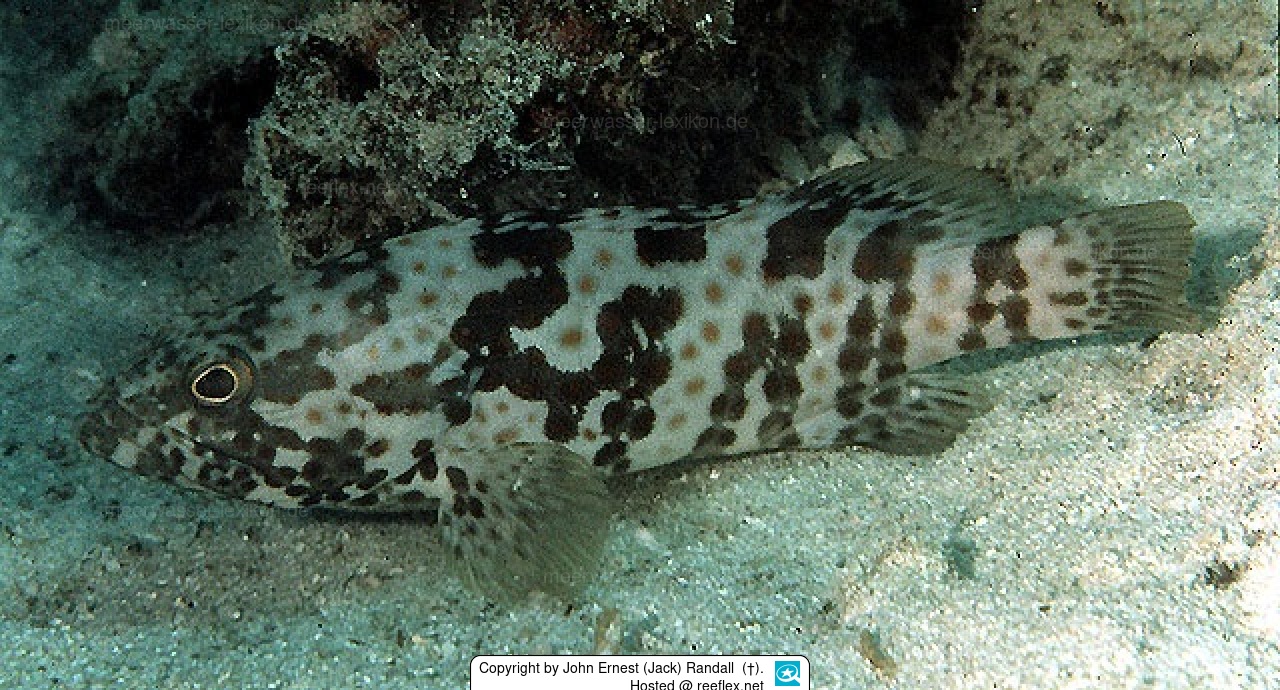
Epinephelus coioides Orange-spotted Grouper

Epinephelus coioides is commonly referred to as Orange-spotted Grouper. Difficulty in the aquarium: suitable for large display tanks (public aquarium or zoo) only. Toxicity: Toxic hazard unknown.


Profilbild Urheber Dr. John Ernest (Jack) Randall (†), Hawaii

Copyright J. E. Randall, Foto aus Bahrain


Courtesy of the author Dr. John Ernest (Jack) Randall (†), Hawaii . Please visit hbs.bishopmuseum.org for more information.

Uploaded by AndiV.

Image detail


Profile

lexID:
7579 
AphiaID:
218200 
Scientific:
Epinephelus coioides 
German:
Estuar-Zackenbarsch, Orange-Punkte Zackenbarsch 
English:
Orange-spotted Grouper 
Category:
Groupers 
Family tree:
Animalia (Kingdom) > Chordata (Phylum) > Actinopterygii (Class) > Perciformes (Order) > Serranidae (Family) > Epinephelus (Genus) > coioides (Species) 
Initial determination:
(Hamilton, ), 1822 
Occurrence:
Kuwait, Sudan, Vereinigte Arabische Emirate, Eritrea, Hong Kong, Djibouti, Andaman and Nicobar Islands, Australia, Bahrain, Bangladesh, Brunei Darussalam, Cambodia, China, Egypt, Fiji, Great Barrier Reef, Gulf of Oman / Oman, India, Indian Ocean, Indo Pacific, Irak, Iran, Israel, Japan, Jordan, Kenya, Malaysia, Mauritius, Micronesia, Mozambique, Myanmar, New Caledonia, Pakistan, Palau, Papua New Guinea, Philippines, Red Sea, Réunion , Samoa, Saudi Arabia, Singapore, Somalia, South-Africa, Sri Lanka, Taiwan, Tansania, Thailand, the Mediterranean Sea, Vietnam, Yemen 
Marine Zone:
Subtidal, sublittoral, infralittoral, deep zone of the oceans from the lower limit of the intertidal zone (intertidal) to the shelf edge at about 200 m water depth. neritic. 
Sea depth:
1 - 100 Meter 
Habitats:
Brackish water, Coastal waters, Estuaries (river mouths), Gravel soils, Rubble rocks, Intertidal zone, Tidal Zone, Mangrove Zones, Muddy grounds, Reef-associated, Rubble floors, Seawater, Sea water 
Size:
9.84" - 47.24" (25cm - 120cm) 
Weight:
15 kg 
Temperature:
24,4 °F - 29,1 °F (24,4°C - 29,1°C) 
Food:
Crabs, Crustaceans, Edible crab, Fish (little fishes), Mantis shrimps, Predatory, Rock lobster, Schrimps 
Difficulty:
suitable for large display tanks (public aquarium or zoo) only 
Offspring:
Not available as offspring 
Toxicity:
Toxic hazard unknown 
CITES:
Not evaluated 
Red List:
Least concern (LC)  
Related species at
Catalog of Life:
 
More related species
in this lexicon:
 
Author:
Publisher:
Meerwasser-Lexikon.de
Created:
Last edit:
2026-04-15 15:54:55 

Info

Epinephelus coioides (Hamilton, 1822)

This large grouper is a Lessepsian migrant that has found its way into the Mediterranean via the Suez Canal from the Red Sea.
The large grouper is mainly found in murky coastal reefs and often in brackish water areas (estuaries) over mud and debris.

Juvenile groupers like to migrate to one of the major nurseries for marine fish: the mangrove forests, which are subject to tidal fluctuations and are very nutrient-rich.

Synonymised names
Bola coioides Hamilton, 1822 · unaccepted
Cephalopholis nebulosus (Valenciennes, 1828) · unaccepted
Epinephelus coiodes (Hamilton, 1822) · unaccepted (misspelling)
Epinephelus nebulosus (Valenciennes, 1828) · unaccepted
Epinephelus suillus (Valenciennes, 1828) · unaccepted
Homalogrystes guntheri Alleyne & MacLeay, 1877 · unaccepted (synonym)
Serranus nebulosus Valenciennes, 1828 · unaccepted
Serranus suillus Valenciennes, 1828 · unaccepted

External links

  1. DAISIE (Delivering Alien Invasive Species Inventories for Europe) (en) (Archive.org). Abgerufen am 07.08.2020.
  2. FishBase (multi). Abgerufen am 07.08.2020.
  3. IUCN Red List of Threatened Species (multi). Abgerufen am 15.04.2026.

Pictures

Commonly

Copyright Richard Field, Foto aus den Arabischen Emiraten, Abu Dhabi
1
Copyright J. E. Randall, Foto aus Indonesien
1
•David C. Cook, Wonga Beach, Australia, Foto von den Philippinnen, El Nido, Palawan
1
•David C. Cook, Wonga Beach, Australia, Foto von den Philippinnen, El Nido, Palawan
1
Copyright J. E. Randall, Foto aus Bahrain
1
Copyright Wolfram Sander, reefcolors.com, Foto aus dem Great Barrier Reef
1

Husbandry know-how of owners

0 husbandary tips from our users available
Show all and discuss