


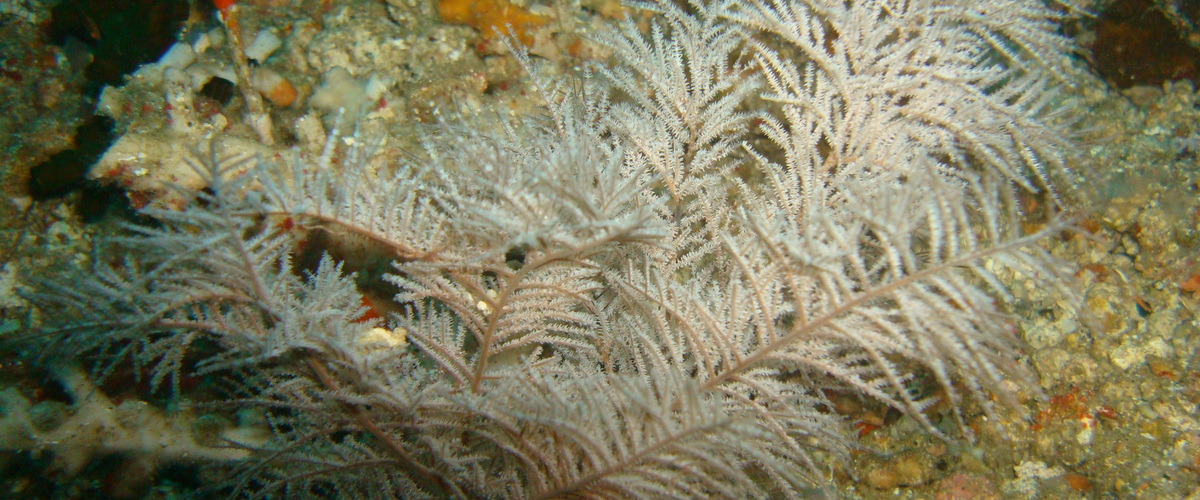
Myriopathes japonica (Brook, 1889)
Recommendation - the coral should be kept in a species-specific tank.
Feeding
The majority of gorgonians do not have zooxanthellae and do not live off light. Azooxanthellate gorgonians do not host symbiotic algae that produce nutrients and energy through photosynthesis.
The pumps should be switched off before feeding. In order for the gorgonian to survive in the aquarium, each individual polyp must be fed sufficiently, i.e.
Weiter lesen
Courtesy of the author Dr. Marzia Bo, Italien
Uploaded by AndiV.
Image detail
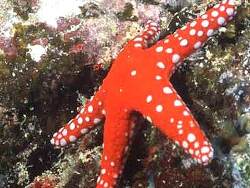
Da bis dato hier noch keine Info vorhanden ist, fange ich mal an.
Seit gestern, 25.10.2026 habe ich privat einen Fromia ghardaqana aus einer Beckenauflösung gekauft.
Größe circa 5cm.
Nach dem Einsetzen hat er sich sofort in den oberen Bereich der Scheiben bewegt. Jetzt wandert er entlang der Scheiben ringsherum.
Das Becken hat 120 Liter und ist ansonsten mit Nadeln und Mandarinfischen besetzt.
Dazu Weichkorallen und unterschiedliche Algen.
Gefüttert wir dreimal täglich Frostfutter und einmal täglich Phytoplankton.

Achtung, kann sehr Aggressiv sein und tötet, nicht mit anderen Kaiserfischen. Ich hatte ein 23 cm Exemplar in einem 3-Meter Becken und ein Franzosenkaiser und ein Imperator mit 15 cm, sie waren eigentlich einigermaßen friedlich auch bei der Fütterung, ab und zu hörte man den Imperator knurren weil der Ringkaiser nach ihm schnappte, aber immer nur kurz. Vor wenigen Tagen war noch alles normal wie jeden Tag, ich ging kurz weg für 2 Stunden. Als ich zurück kam, lag der Imperator lädiert am Boden und starb. Es konnte nur der Ringkaiser gewesen sein. Er muß voll durchgedreht sein, unberechenbar der Fisch. Vergesellschaftet kein Großkaiser, es geht lange gut bis einer durchdreht. Ich kannte das nie aus der Vergangenheit, schon in den 80er hatte ich 2-3 Kaiser in damals kleineren Becken. Wenigstens weiß ich heute, dass es besser ist nur einen Großkaiser im Becken zu haben. Ich hoffe aber die zwei verbliebenden kommen nun miteinander aus. Der Kaiser hat eine extrem kräftige Statur und eine Dicke von mindestens 3 cm, frisst alles, auch Stinte schnappt er weg, wenn man die Nasenmuräne füttert, bisst sie in der Mitte durch, ein Piranha. Korallen lässt er in Ruhe.

Ergänzung zu meinem Bericht von 7/2026
Leider hat sie in der Zwischenzeit zwei meiner Phymanthus crucifer gefresen.
Es waren Anemonen von ca. 5 cm Durchmesser.
VG
Elisabeth

fishbase gibt als Nahrung auch Zooplankton an. Ich habe den Eintrag geändert und überarbeitet. Vielen Dank für den Hinweis.
Die Empfehlung großen Frostfutters sehe ich nicht so. Die Tiere fressen als Juvenile vor allem abwechslungsreiches Zooplankton (Chaetognata, Copepoden und Appendicularien) und ändern mit 11- 12 cm ihre Ernährung hin zu gelatinösen Plankton (Cnidaria, Quallen, Rippenquallen, Tunicaten). Grund sind anatomische Veränderungen, u.a. bleibt das Maul relativ klein.
GAHAN, J. et al. Increasing body size unlocks gelatinous planktivory in a key coral reef fish species. Coral Reefs 45 (2026): 1963–1978. doi.org

Beas Bericht von der Studeriotes longiramosa hat mich neugierig gemacht auf eben diese Koralle.
Die Farbe finde ich jetzt nicht so hinreißend, es ist aber für einen Azoo-Fan eine interessante Koralle.
Aufgrund meiner Seefedern in meinem Azoo-Becken ist dieses auf jeden Fall ein passender Lebensraum für diese Koralle.
Die Fütterung dürfte den Ansprüchen genügen und so bestellte ich, als diese Tiere bei AquaDragon neu auftauchten direkt ein Tier.
Dieses mache einen sehr guten Eindruck.
Leider hatte ich keinerlei Angaben über die Umstände der Haltung im Aquarium. Ich erinnerte mich, daß Bea sagte sie erschein aus dem Bodengrund.
Also Recherche im Netz, und die Bilder, die ich sah zeigten immer ein Tier im Sand, nie auf Steinen.
Meine inzwischen beiden Tiere waren auf einem Stein befestigt geliefert worden und ich stellte sie an verschiedenen Stellen im Aquarium, aber ich fand den Zustand nicht zufriedenstellend.
Es war alleine schon eine Herausforderung zu sehen, wo bei dem Tier oben war.
Man stellt sich eine Kartoffel vor, an der es eine vermutete Öffnung gab, bei der man annahm diese zeige nach oben. Der Stein, mit dem die Tiere gekommen waren, war aber der Strömungsbelastung nicht gewachsen, so daß diese nicht wirklich Halt gab.
Also klebte ich den Stein des Tieres an einen massiveren Stein, der Halt gab. Es stellte sich heraus, oben war nicht Oben, sondern die Seite.
Nach der Recherche ergab sich, der bisherige Standort oben auf dem Riff war falsch.
Kein Problem.
Ein großes Loch im über 10 cm starkem Sandbett angelegt, in einem Bereich mit guter Strömung, die beiden Studeriotes longiramosa so eingebettet, daß die vermutete Oberkante der „Kartoffel“ mit der fertigen Sandschicht abschließen würde.
Den entnommenen Sand mit Beckenwasser (wegen der Biologie) ausgewaschen und wieder aufgefüllt.
Bereits am nächsten Tag war die erste der Korallen so weit geöffnet, wie noch nie. Ich habe wohl den richtigen Weg der Haltung der Koralle gefunden.
Die Fütterung ist vom Grundsatz her weiter wie im ig-meeresaquaristik.de beschrieben, aber diese Koralle bekommt eine persönliche Fütterung mit Pipette mit www.zierfischfutterhandel.de
Zumindest, bis eine sichere Etablierung im Aquarium geschehen ist.
Natürlich sind zwei Monate noch kein Durchbruch, ich bin aber zuversichtlich.
VG
Elisabeth

Hier ist auch ein Video von der Porcellanella haigae.
ig-meeresaquaristik.de
VG
Elisabeth

Hallo Tierpfleger,
danke für deinen berechtigten Hinweis. Der Artikel bedurfte einiger Überarbeitung.Ich habe den Artikel überarbeitet und auch deinen Hinweis der Literzahl übernommen.
 Dr. Marzia Bo, Italien


