


 robertbaur


Info
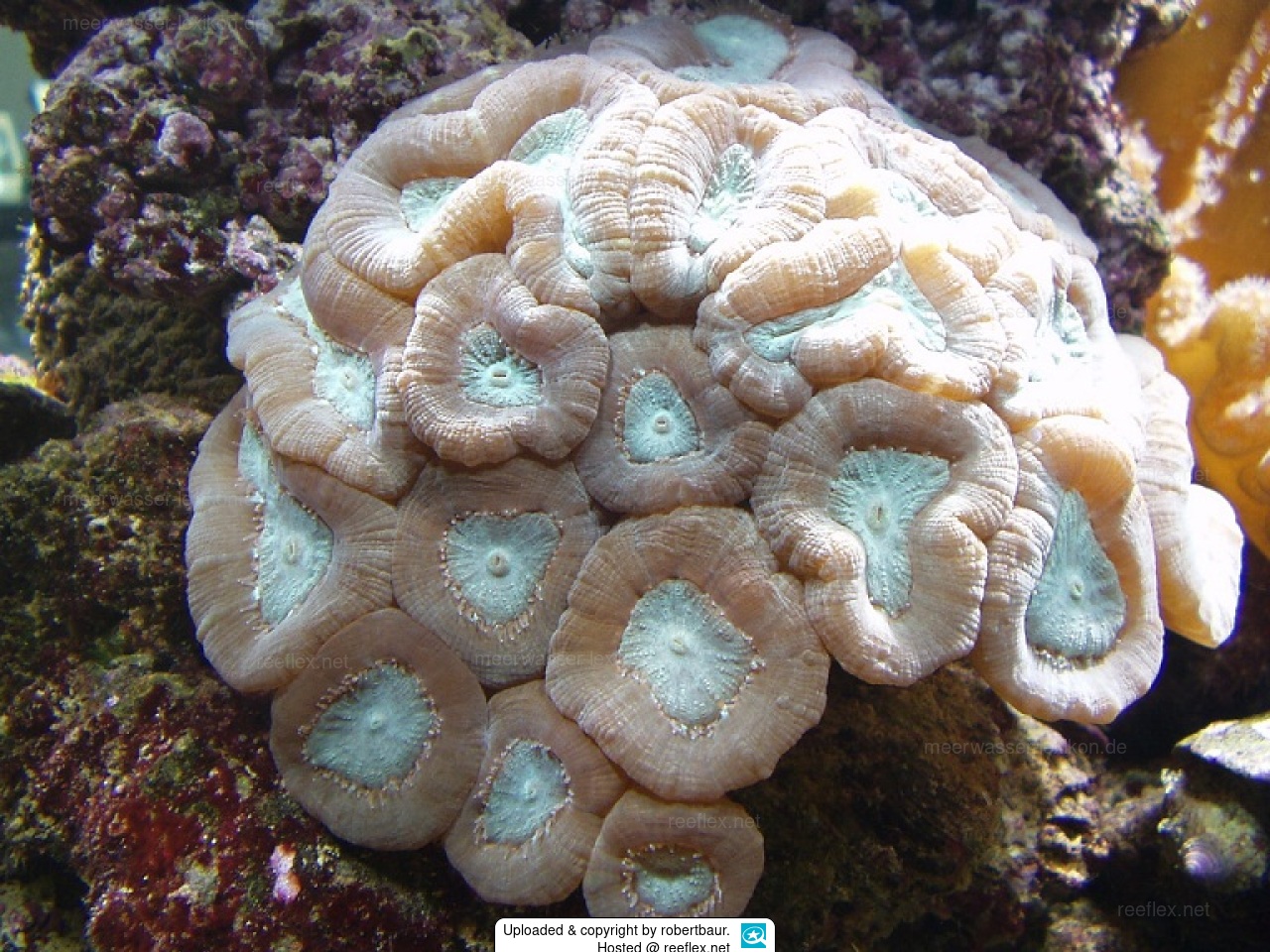
Astraeosmilia connata Ortmann, 1892
Description: Colonies are phaceloid. Corallites are prominent and sturdy, 10-25 millimetres diameter, and frequently have more than one mouth. Septa are irregularly spaced, exsert and rough-edged. Costae are poorly developed; paliform lobes are not conspicuous.
Color: Grey-brown.
Habitat: Shallow reef environments.
Abundance: Rare.
Similar Species: Caulastrea tumida, which has smaller, more fleshy corallites and more even septa.
Synonymised names
Astreosmilia connata Ortmann, 1892 · unaccepted > misspelling
Caulastraea connata (Ortmann, 1892) · unaccepted > superseded combination
Caulastrea connata (Ortmann, 1892) · unaccepted > superseded combination (misspelling genus name)
Description: Colonies are phaceloid. Corallites are prominent and sturdy, 10-25 millimetres diameter, and frequently have more than one mouth. Septa are irregularly spaced, exsert and rough-edged. Costae are poorly developed; paliform lobes are not conspicuous.
Color: Grey-brown.
Habitat: Shallow reef environments.
Abundance: Rare.
Similar Species: Caulastrea tumida, which has smaller, more fleshy corallites and more even septa.
Synonymised names
Astreosmilia connata Ortmann, 1892 · unaccepted > misspelling
Caulastraea connata (Ortmann, 1892) · unaccepted > superseded combination
Caulastrea connata (Ortmann, 1892) · unaccepted > superseded combination (misspelling genus name)

