


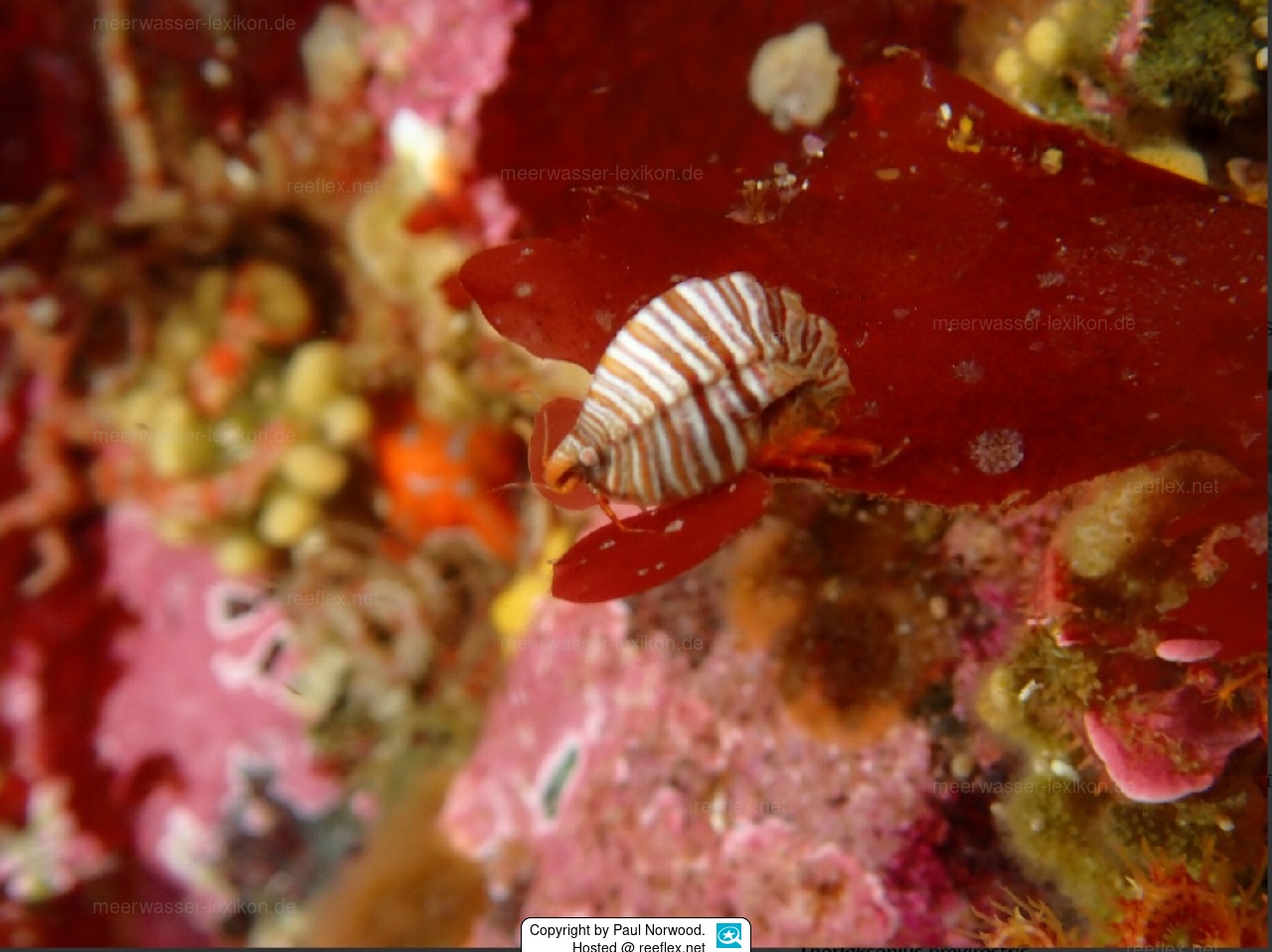
 Paul Norwood, USA


Info
Countless crustaceans inhabit the northern oceans. They are one of the largest groups of marine invertebrates and form the foundation of food chains. In some places, the biomass of certain crustacean species exceeds the combined biomass of all other animals.
Crustaceans include planktonic mysidaceans and euphausiaceans (also known as krill) and serve as the primary food source for whales and many fish. They also include numerous amphipods and isopods, which act as scavengers by clearing all dead organic matter from the seafloor, thereby playing a vital role in marine communities.
There is a vast number of amphipods, both in terms of species diversity and biomass—the total number of individuals. They live in every conceivable habitat: in the littoral zone and at depths of many kilometers, in freshwater and hydrothermal vents, in deep caves, and even on the forest floor, where they can easily escape the wet leaf litter and move freely across the ground.
About 10,000 species of amphipods have been officially described, but this is certainly only the beginning of a very long list. They are also very widespread in the northern seas, where they occupy a variety of ecological niches. Then there are parasitic amphipods that control the populations of jellyfish and other jellyfish-like organisms, as well as crabs, shrimp, lobsters, and many others.
These animals are important not only for the health of the oceans but also for the people whose lives have been tied to marine fisheries for centuries.
Thorlaksonius brevirostris is one such amphipod that stands out particularly for its two-colored striped body pattern.
We extend our heartfelt thanks to Paul Norwood of the USA for the first photograph of this species.
Etymology:
The genus “Thorlaksonius” was named in honor of Dr. Neil F. Thorlakson of Bellevue, Washington, who, together with his wife Pat and his family, has long been an active nature lover and advocate for biological research and resource conservation in the North American Pacific region.
Etymology:
The species name “brevirostris” comes from Latin and is a compound word frequently used in biological nomenclature to describe animals with a short snout or beak.
Crustaceans include planktonic mysidaceans and euphausiaceans (also known as krill) and serve as the primary food source for whales and many fish. They also include numerous amphipods and isopods, which act as scavengers by clearing all dead organic matter from the seafloor, thereby playing a vital role in marine communities.
There is a vast number of amphipods, both in terms of species diversity and biomass—the total number of individuals. They live in every conceivable habitat: in the littoral zone and at depths of many kilometers, in freshwater and hydrothermal vents, in deep caves, and even on the forest floor, where they can easily escape the wet leaf litter and move freely across the ground.
About 10,000 species of amphipods have been officially described, but this is certainly only the beginning of a very long list. They are also very widespread in the northern seas, where they occupy a variety of ecological niches. Then there are parasitic amphipods that control the populations of jellyfish and other jellyfish-like organisms, as well as crabs, shrimp, lobsters, and many others.
These animals are important not only for the health of the oceans but also for the people whose lives have been tied to marine fisheries for centuries.
Thorlaksonius brevirostris is one such amphipod that stands out particularly for its two-colored striped body pattern.
We extend our heartfelt thanks to Paul Norwood of the USA for the first photograph of this species.
Etymology:
The genus “Thorlaksonius” was named in honor of Dr. Neil F. Thorlakson of Bellevue, Washington, who, together with his wife Pat and his family, has long been an active nature lover and advocate for biological research and resource conservation in the North American Pacific region.
Etymology:
The species name “brevirostris” comes from Latin and is a compound word frequently used in biological nomenclature to describe animals with a short snout or beak.

