Anzeige
Fauna Marin GmbH Tunze Cyo Control Kölle Zoo Aquaristik Osci Motion

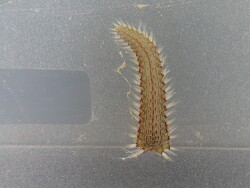
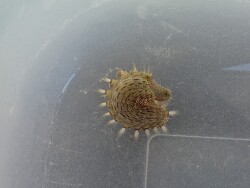
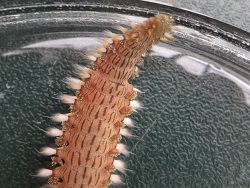
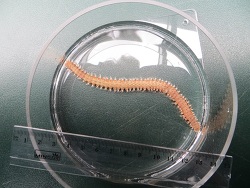
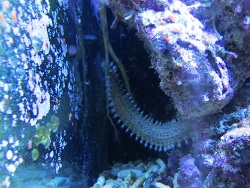
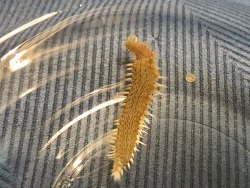
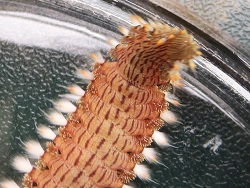
Pherecardia distincta Bristle Worm

Pherecardia distincta is commonly referred to as Bristle Worm. Difficulty in the aquarium: Not suitable for aquarium keeping. Toxicity: Toxic hazard unknown.


Profilbild Urheber Elisabeth

Pherecardia distincta Kopf


Uploaded by Elisabeth.

Image detail


Profile

lexID:
17918 
AphiaID:
1847709 
Scientific:
Pherecardia distincta 
German:
Borstenwurm 
English:
Bristle Worm 
Category:
Sea Worms 
Family tree:
Animalia (Kingdom) > Annelida (Phylum) > Polychaeta (Class) > Amphinomida (Order) > Amphinomidae (Family) > Pherecardia (Genus) > distincta (Species) 
Initial determination:
(Hoagland, ), 1920 
Occurrence:
Eastern Pacific Ocean, French Polynesia, Gulf of Mannar , Hawaii, Indian Ocean, Philippines, Samoa, Western Indian Ocean 
Marine Zone:
Intertidal (Eulittoral), intertidal zone between the high and low tide lines characterized by the alternation of low and high tide down to 15 meters 
Sea depth:
Meter 
Habitats:
Coral reefs, Rocky, hard seabeds, Seawater, Sea water 
Size:
7.87" - 17.72" (20cm - 45cm) 
Temperature:
°F - 82.4 °F (°C - 28°C) 
Food:
Carnivore, Predatory 
Difficulty:
Not suitable for aquarium keeping 
Offspring:
None 
Toxicity:
Toxic hazard unknown 
CITES:
Not evaluated 
Red List:
Not evaluated (NE) 
Related species at
Catalog of Life:
 
More related species
in this lexicon:
 
Author:
Publisher:
Meerwasser-Lexikon.de
Created:
Last edit:
2025-11-26 20:48:35 

Info

Pherecardia distincta (Hoagland, 1920)

Synonymised names
Hermodice distincta Hoagland, 1920 · unaccepted > superseded combination (superseded original combination)
Hermodice pennata tutuilensis Treadwell, 1926 · unaccepted > junior subjective synonym
Pherecardia polylamellata Silva, 1960 · unaccepted > junior subjective synonym
External links

  1. WoRMS - images (en). Abgerufen am 26.11.2025.
  2. zoosystema (en). Abgerufen am 27.11.2025.

Pictures

Commonly

Pherecardia distincta Kopf
1
1

Husbandry know-how of owners

am 26.11.25#2
Berichtigung der Größe: 45 cm

www.youtube.com 12.09
am 20.04.18#1
Die Vermehrung erfolgt in meinem Becken vermutlich haufptsächlich durch Teilung.

Mir war bereits aufgefallen, daß diese Würmer immer ein seltsames Muster aufweisen.
Immer ein Stück des Wurmes hat ein identisches Muster und hat teilweise auch eine abweichende Breite.

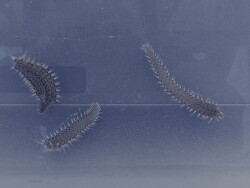
Jetzt ist es mir Gelungen ein Versteck eines Wurmes aufzuheben. Hierin befand sich ein Muttertier mit drei Teil-würmern die sich dann wieder zu Komplett-würmern auswachsen.

Bilder sind Hochgeladen.
2 husbandary tips from our users available
Show all and discuss