



 Plazi
Plazi


Info
The first description of the new species, Coralliozetus clausus, represents a multiple special achievement and effort by the scientist, Dr. Philipp A. Hastings
First of all, the entire project on the Costa Rican Cocos Island was under the influence of the corona pandemic and its restrictions and limitations. The small size of the species to be examined, which Dr. Hastings had to study mainly with a dissecting telescope, also made it more difficult
The species is considered to be a crypto-benthic fish species, which live on the seabed and are extremely difficult to detect and identify due to their small size, coloration and habits.
Exact observations of the very small species could only be carried out with the help of a dissecting microscope, especially since the blenny liked to stay in the abandoned shells of tube worms.
The front dorsal fin of breeding males of the species is white.
Short description:
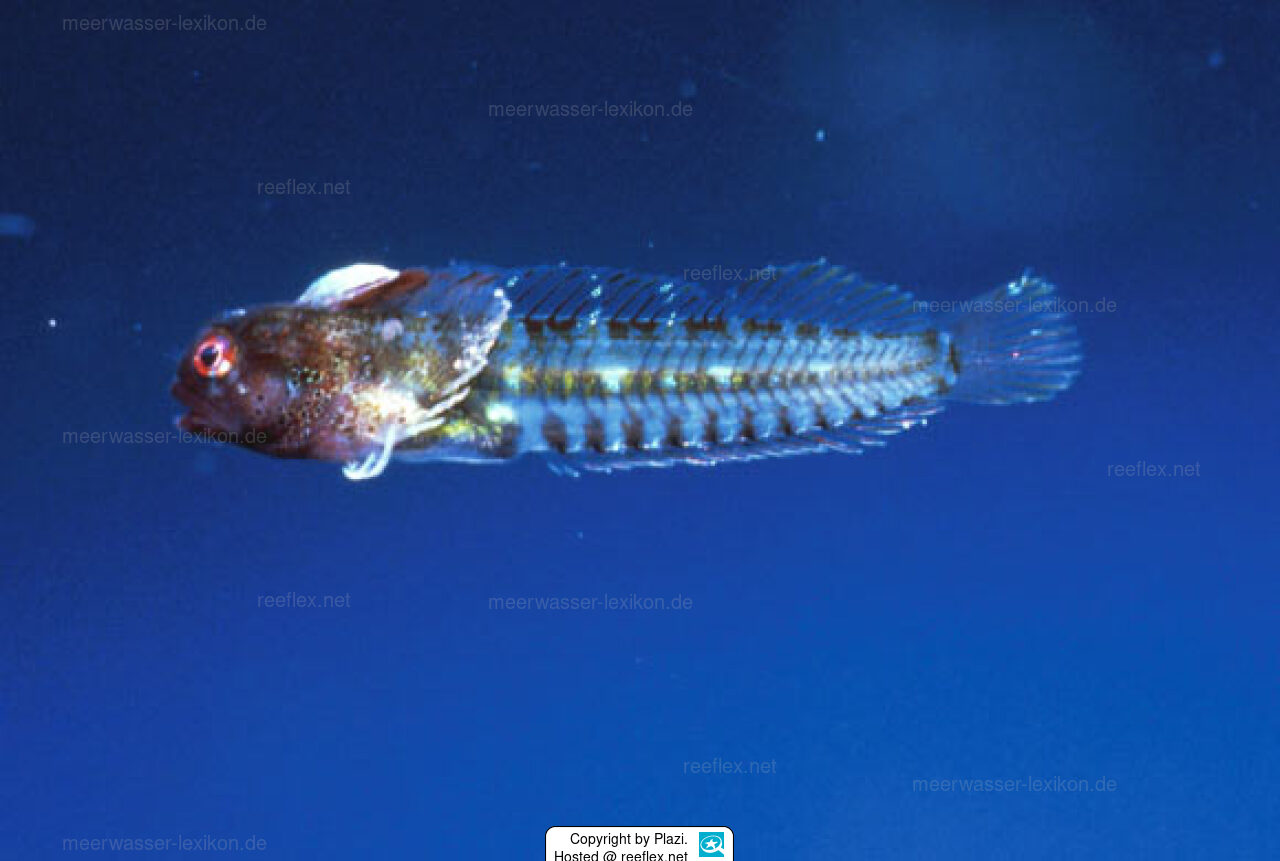
The head is black, covered with melanophores, which merge into white spots at the back of the operculum and branchiostegal rays and continue to the front base of the pectoral fin, which merges into white. Dark spots surrounded by white on the operculum and branchiostegal rays. Iris red with a posteroventral white spot and an inner white ring. Supraorbital cirrus dark. Body hyaline, with a row of paired black saddles along the dorsum: three paired inverted triangles in front, five in back, connected by increasingly narrow dashes A row of 12 black spots along the base of the anal fin, with intermediate white spots along the lower body margin. Melanophores inside along most neural and pelvic spines and centers of the spine, with three or four intermediate lighter areas, especially noticeable along the anterior spine; irregular yellowish spots in these light areas Peritoneum with scattered melanophores and an irregular yellowish spot posteroventrally; a white spot between posterior peritoneum and vertebral column
Posterior margin of the hypural plate with a vertical black spot and dark spots on the upper and lower caudal peduncles. Dorsal fin light white from the base to the distal tip of spines I to II, followed by a black spot from the base to the distal tip of spines II to III Further back, the dorsal fin is marked with melanophores along the spines and rays with intervening clear membranes, except for a row of black marks near the distal tips of most rays and white spots on the spiny dorsal fin in vertical rows over light areas between the dorsal saddles
Anal fin with melanophores proximal and white at the distal margin. Thoracic fin clear above with white lower rays. Pelvic fin rays white. Caudal fin with
scattered melanophores and whitish areas on the rear membranes
Coralliozetus clausus is a short-bodied representative of the genus, together with Coralliozetus cardonae (Caribbean), Coralliozetus angelicus and Coralliozetus springeri (both Eastern Pacific). This newly described species increases the number of cryptobenthic fish endemic to Isla del Coco to twelve (as of 2021).
Etymology:
The species name “clausus” is derived from Latin and means “enclosed” or “cut off”, in reference to the restricted distribution of this species, which is only known from Isla del Coco in Costa Rica.
The name also refers to the isolation imposed on the author by the Covid-19 pandemic, and provides an opportunity to complete the description of this species, the peculiarity of which has been known for some time.
The common name “pandemic blenny” (in Spanish “Tubícola Pandémica”) is proposed in view of these difficult times.
First of all, the entire project on the Costa Rican Cocos Island was under the influence of the corona pandemic and its restrictions and limitations. The small size of the species to be examined, which Dr. Hastings had to study mainly with a dissecting telescope, also made it more difficult
The species is considered to be a crypto-benthic fish species, which live on the seabed and are extremely difficult to detect and identify due to their small size, coloration and habits.
Exact observations of the very small species could only be carried out with the help of a dissecting microscope, especially since the blenny liked to stay in the abandoned shells of tube worms.
The front dorsal fin of breeding males of the species is white.
Short description:
The head is black, covered with melanophores, which merge into white spots at the back of the operculum and branchiostegal rays and continue to the front base of the pectoral fin, which merges into white. Dark spots surrounded by white on the operculum and branchiostegal rays. Iris red with a posteroventral white spot and an inner white ring. Supraorbital cirrus dark. Body hyaline, with a row of paired black saddles along the dorsum: three paired inverted triangles in front, five in back, connected by increasingly narrow dashes A row of 12 black spots along the base of the anal fin, with intermediate white spots along the lower body margin. Melanophores inside along most neural and pelvic spines and centers of the spine, with three or four intermediate lighter areas, especially noticeable along the anterior spine; irregular yellowish spots in these light areas Peritoneum with scattered melanophores and an irregular yellowish spot posteroventrally; a white spot between posterior peritoneum and vertebral column
Posterior margin of the hypural plate with a vertical black spot and dark spots on the upper and lower caudal peduncles. Dorsal fin light white from the base to the distal tip of spines I to II, followed by a black spot from the base to the distal tip of spines II to III Further back, the dorsal fin is marked with melanophores along the spines and rays with intervening clear membranes, except for a row of black marks near the distal tips of most rays and white spots on the spiny dorsal fin in vertical rows over light areas between the dorsal saddles
Anal fin with melanophores proximal and white at the distal margin. Thoracic fin clear above with white lower rays. Pelvic fin rays white. Caudal fin with
scattered melanophores and whitish areas on the rear membranes
Coralliozetus clausus is a short-bodied representative of the genus, together with Coralliozetus cardonae (Caribbean), Coralliozetus angelicus and Coralliozetus springeri (both Eastern Pacific). This newly described species increases the number of cryptobenthic fish endemic to Isla del Coco to twelve (as of 2021).
Etymology:
The species name “clausus” is derived from Latin and means “enclosed” or “cut off”, in reference to the restricted distribution of this species, which is only known from Isla del Coco in Costa Rica.
The name also refers to the isolation imposed on the author by the Covid-19 pandemic, and provides an opportunity to complete the description of this species, the peculiarity of which has been known for some time.
The common name “pandemic blenny” (in Spanish “Tubícola Pandémica”) is proposed in view of these difficult times.

